
TO’s & Three’s – Celtics Column – November 2026
By Vinny Jace, Special to the15net dot com:
(Note: This column was written prior to last night’s Emirates NBA Cup game. – Ed)
We are still early in the season. Teams are figuring themselves out as limitations become apparent and the schedule fluctuates between manageable and difficult. For the Celtics, a 12–6 start is solid on paper. They currently sit second in the Eastern Conference behind the 15–4 Philadelphia 76ers. While that gap is steep, one would hope the Sixers begin to play closer to their +2.1 point differential, and Boston plays closer to their +9.4.
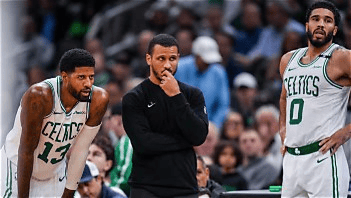
Boston’s recent four-game skid—which dropped them from 11–2 to 11–6 at the hands of Orlando, Denver, Sacramento, and Golden State (without Steph Curry; albeit the Celtics were without Paul George, though they still had Jayson Tatum)—brought significant annoyance to my viewing experience. Though the losses were close (10 points vs. Orlando, 4 vs. Denver, 1 vs. Sacramento, and 1 vs. Golden State), my main concern is Derrick White’s regression from three-point range and Payton Pritchard’s inability to score inside the arc.
White’s slide has been a theme since last season, when he shot 39% from the field, and he is sitting at that exact mark 16 games into this campaign. Meanwhile, Pritchard shot an insane 55% on two-pointers during his Sixth Man of the Year campaign last year, but that mark has fallen to 46%.
While White attributes his slump to a mental hurdle, Pritchard’s issues appear to stem from Boston’s spacing not being as crisp as I expected prior to the season opener. Despite Tatum and George playing at a high level, the Celtics are missing a key ingredient that allowed Pritchard to have one of the greatest isolation scoring seasons in league history.
We can point to the obvious and say Jaylen Brown’s downhill scoring played a role in complementing Pritchard. Perhaps there is truth to that, though in games Brown missed last season, Pritchard averaged 25 points on 48% shooting. The alternative culprit could be that Mitchell Robinson simply isn’t a floor-spacing big man. Luka Garza may be slow-footed and a liability on defense, but he sets hard screens and can hit the occasional triple. Joe Mazzulla will have to figure out how to get Pritchard’s groove back alongside a center who—while a better overall backup to Neemias Queta than the alternative—appears to be a poor fit for him.
Through 17 games, White has shot a poor 30-for-103 from deep, acknowledging that the “mental side” and confidence are affecting him when shots don’t fall. That isn’t something you want to hear from your starting two-guard, who will naturally take the bulk of the open looks because your star player commands so much attention.
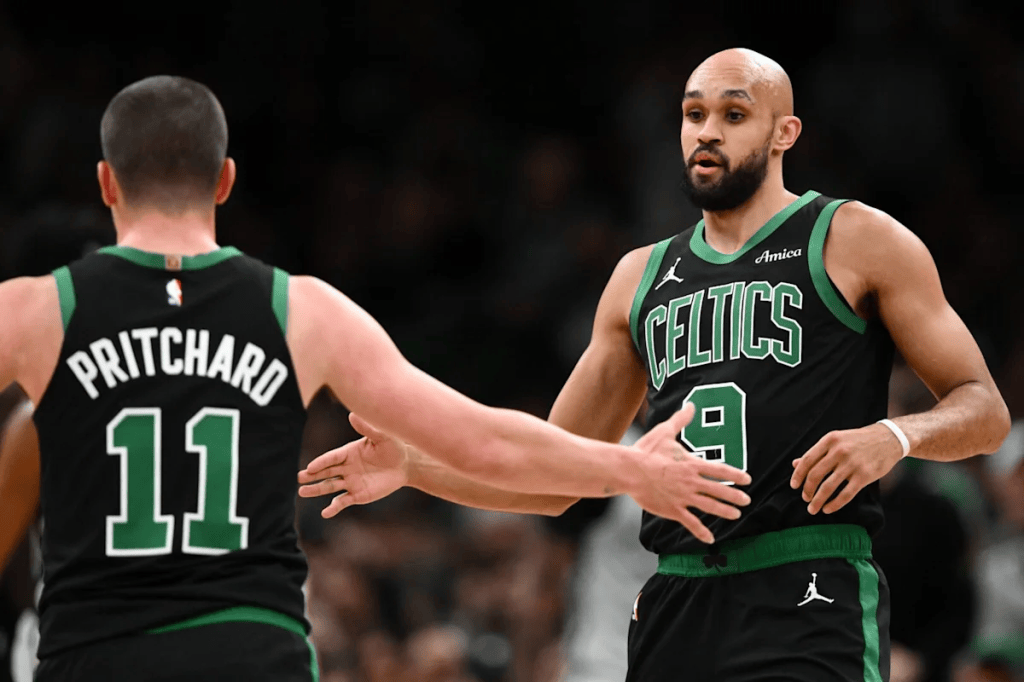
The simple hope is that White and Pritchard shooting a combined 20% on open looks during that rough road trip is unsustainable over the long haul. With Tatum (6.8 APG) and George’s gravity, you’d expect the floor to rise.
Ultimately, Boston’s unfortunate four-game skid can be blamed on their inability to consistently score from the charity stripe, leaving a combined 23 points on the table over those four defeats. For context, Brown is currently shooting 71% from the free-throw line. While his two-point scoring is sorely missed, simply not making the trade wouldn’t magically make the Celtics 15–4 instead of 12–6.
As for White’s shooting woes, he is still an All-Defensive caliber guard sporting a strong +8.7 plus/minus, and his 95% clip from the free-throw line leaves hope that his jumper will return… one day.
A recent adjustment Mazzulla implemented is putting Jordan Walsh on the bench, no longer giving him spot-starter minutes. Walsh is a solid defender—one I’d like to see put on Jalen Brunson and Tyrese Maxey in crucial situations—but his offensive limitations are so glaring there is no way to spin him into a positive in that role. The team’s net rating with him on the floor is -2.2, compared to +15.3 with him off. Even factoring in that he plays only 14 minutes a game, that is a wild swing.
The two alternatives for Joe are veteran Sam Hauser and second-year youngster Hugo Gonzalez. The latter sports an incredible motor and higher long-term upside. However, Mazzulla turned to the veteran, as most coaches tend to do. For what it is worth, the early signs are encouraging; Boston is responding well to Hauser’s floor spacing, making him a much better fit with the starting unit. Hauser’s 42% mark from deep, coupled with his cumulative +159 plus/minus this season, offers a steady floor for the offense. Because opponents refuse to leave him to double Tatum, he acts as an ideal release valve for the Celtics’ best player. Starting him alongside Tatum, George, White, and Queta on Monday night against Washington instantly opened up driving lanes, sparking an 18–9 opening run and a 131–116 win.
A curious wrinkle is that Mazzulla’s best lineup has barely been used all year. The five-man unit of Pritchard, White, George, Tatum, and Queta has logged just 9 minutes together on the floor yet has posted an astronomical +46.8 net rating (a 136.8 offensive rating and a 90.0 defensive rating). So why hasn’t it been used more? Earlier in the year, Mazzulla made it known he prefers bigger wings—like Walsh, Gonzalez, or Hauser—alongside White, Tatum, and Queta. My hopeful explanation is that Mazzulla wants to keep this lineup close to the vest for higher-stakes matchups and will deploy it more come playoff time. Knowing my luck, though, he just doesn’t think it holds up over the long term.
Lastly, we should address the endless chatter comparing Tatum to Brown. If we compare their basic stats—Brown from last year, Tatum from this year—the edge goes to the man now playing for the 76ers:
• Brown (2025–26): 28 PPG, 6 RPG, 5 APG | 47/34/79 splits (52% on 2PT)
• Tatum (2026–27): 27 PPG, 6 RPG, 6 APG | 43/34/84 splits (50% on 2PT)
This gap comes down to scoring efficiency and shot diet. Brown operates primarily inside the arc, having led the NBA in two-point attempts per game (16) last season. Tatum relies heavily on perimeter volume (averaging 8 three-point attempts per game), which drags his overall field-goal clip down to 43% despite his 41-point explosion against Washington.
A feather in Tatum’s cap, however, is his distinct advantage in advanced analytics—specifically Box Plus/Minus (BPM) and assist percentage. Brown sat at a +3.3 BPM last year compared to Tatum’s +6.9, and Brown’s 25% assist rate is dwarfed by Tatum’s 34%. Tatum’s playmaking and ball security also flip the old narrative that they were simply dueling No. 1 options. Assisting on 34% of teammates’ field goals while maintaining a clean 2.18 assist-to-turnover ratio (to Brown’s 1.41) speaks volumes.
We’ll see if Tatum can sustain this pace, but playing at this level just 40 games removed from an Achilles tear is no small feat. As much as it hurts to give Brown credit right now, he did sustain his production across 71 games while carrying an incredible burden.
For what it is worth, at this point last year Boston sat at 10–8 with a net rating reflecting a sub-.500 team. This season they are 12–6 with a net rating of a team that should be 14–4.
Comparing Tatum to Brown right now is apples and oranges. Brown is the third option on a loaded roster alongside LeBron James, Joel Embiid—who, even in a diminished state, still fills the box score—Tyrese Maxey, and let’s not forget VJ Edgecombe. Meanwhile, Tatum is the clear first option on a team where two of his starting guards currently can’t throw the ball into the ocean. This isn’t to say Brown is outplaying Tatum—he most certainly isn’t. Unfortunately for us Celtics fans, Brown landed in a situation where he can mask his flaws while soaking up plenty of credit. Huh, so this is what it feels like on the other side.
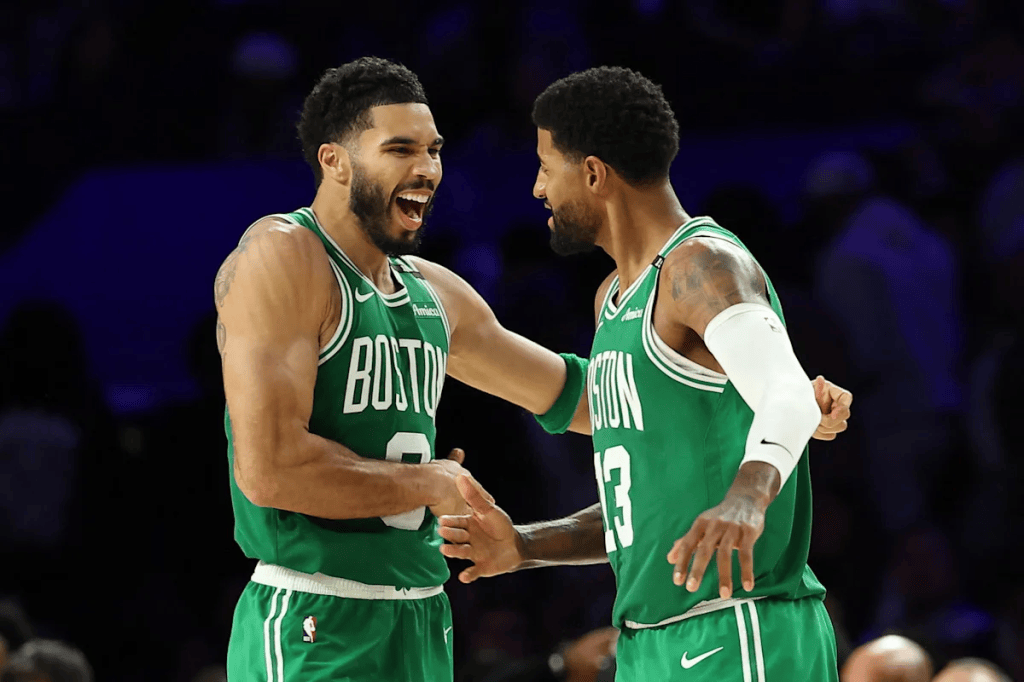
As for George, the succinct way to put it is: I can’t complain. His +11.3 average plus/minus in lineups featuring him dwarfs Brown’s +1.9 from a year ago. The obvious caveat is that George is 36 and injury-prone, so the Celtics will need to be cognizant of his workload—playing him on a back-to-back during this recent road trip definitely irked me. Still, George has performed exceptionally to well this season to start.
Vinny Jace is a special contributor to The15net.com and appears on the Beyond Entitled podcast.

