Category Archives: The Association

TO’s & Threes – NBA Column 07/27/26

LeBron. Raymone. James. Think he likes the attention? Heh heh heh.

By Vinny Jace, Special to the15net dot com:

To many onlookers, the simplest answer is always the most alluring: “Just keep Jaylen Brown—you don’t have to give him the extension if you don’t want to.” “Just trade for Giannis. What’s all this jargon about not wanting to pay him 35% of the cap?” “Go get LeBron.” What complicates this is that the teams who made these moves aren’t inherently dumb. While I see flawed logic in their methods, I can’t deny it’s arguably more fun to be a fan of the Miami Heat or Philadelphia 76ers right now. Giannis and Bam Adebayo form a fierce frontcourt. The 76ers have a stacked starting five of pure hoopers and two bench pieces to round out their rotation. What they did was undoubtedly sexier than anything Boston did. Miami might fade, but Philadelphia is a tougher sell—mainly because I can’t name a team that ever regretted getting into the LeBron business.

The new realities of the CBA have scared some teams into submission and driven others into volatile states where they’re throwing whatever they can at the wall. Timberwolves GM Tim Connelly was the first to routinely take out another mortgage on the house to build around Anthony Edwards—first with the Rudy Gobert acquisition, then by trading Karl-Anthony Towns, and now with his riskiest gambit yet: sending four first-round picks and three seconds for LaMelo Ball. Holding a core together nowadays is nearly impossible. Constant reshuffling and big splashes are to be expected. The only alternative is patience, but only a few general managers can keep their ducks in a row before job-security rumblings begin.

Coming off the heels of the “Dork Elvis” era, the 76ers have decided to go full dumb-jock mode: trading for Jaylen Brown and throwing themselves at LeBron. Their starting five features two electric scoring guards in Tyrese Maxey and V.J. Edgecombe, a Finals MVP in Brown, arguably the Greatest Player of All Time in LeBron, and the most dominant big man since Shaq in Joel Embiid. Sounds great, right? That’s because it is great. But there are major related caveats: health and age. In the most recent playoffs, only two players logged significant minutes among the league’s aging stars—LeBron (duh) and Kevin Durant. (& also James Harden- Ed.) Neither made it to the Conference Finals. LeBron was eliminated in the second round by the Oklahoma City Thunder. He wasn’t personally embarrassed—he played 37 minutes a night, averaging 23 points, 6 rebounds, and 6 assists—but on December 30th he’ll turn 42. He’s still the man.

Just not on defense.

You can’t blame him for taking plays off, failing to box out, or loafing in transition. Nick Nurse isn’t known for conserving his players. Maxey and Edgecombe had to play a grueling 35–40 minutes per night just to drag Philly to the 7th seed. While the team is significantly more talented than last season, all it takes is one injury to LeBron or Embiid to put the young guards back in the same brutal spot.

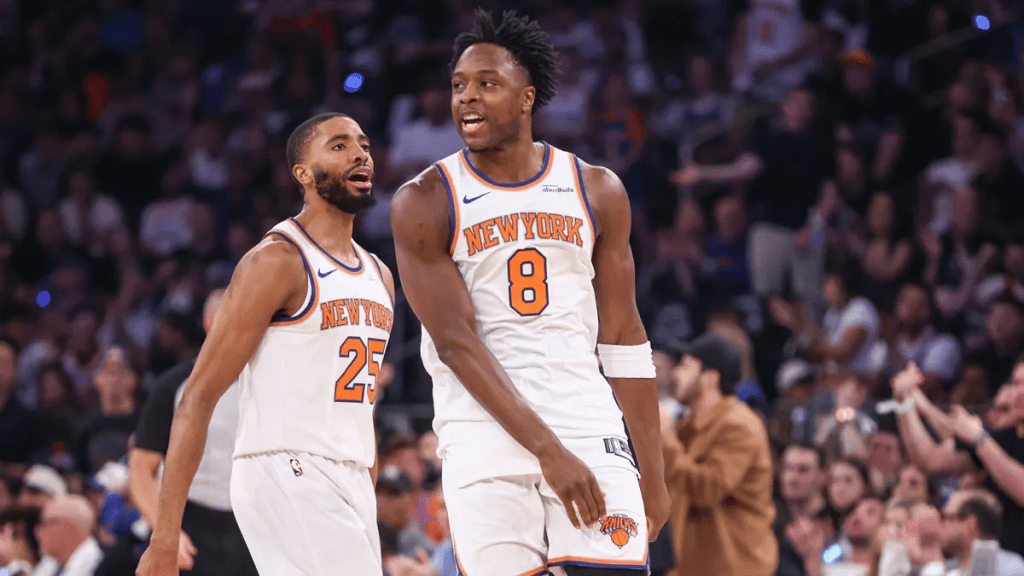
In 2023, Milwaukee was instantly labeled a title contender after trading for Damian Lillard. Then it turned out Giannis and Lillard were like oil and water. The partnership fizzled, and the biggest acquisition ended up being Jrue Holiday, whom Stevens swiped from the scrap heap in mid-September. The following year, savvy moves on the margins delivered Oklahoma City a title with Alex Caruso and Isaiah Hartenstein. A year later, the Knicks’ retention of O.G. Anunoby proved more valuable than the flashy, score-first guard San Antonio had in De’Aaron Fox.
This is the new NBA. Stars get you through the regular season.


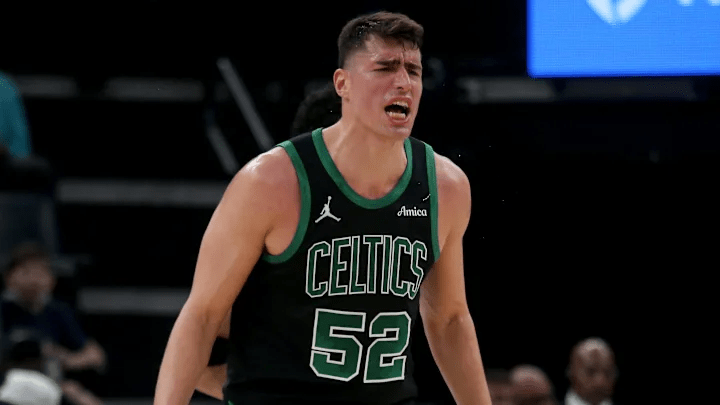
The players on the margins save your ass in the playoffs. Why did the Celtics lose to Philadelphia? Because Payton Pritchard and Jordan Walsh didn’t play more. It sounds ridiculous—like saying the Celtics lost in ‘85 because there wasn’t enough Quinn Buckner. But that’s the world we live in now. The 76ers and Heat will go as far as their role players take them. But they can’t be just any role players. They need super subs—guys who do everything consistently enough that you take it for granted. You can’t cross your fingers hoping for a good night from your eighth man. The moment you realize you can’t count on two threes off the bench, a handful of lockdown defensive possessions, or connective passing from your backup ball-handler, you’re fucked. Maybe the Heat and 76ers will prove me wrong. I’m typically wrong about these things. I can’t lie: I’m a little distressed. The two teams I hate most just added unstoppable individual forces. Yeah, I’m scared. Yeah, I’m concerned.

I just watched the godforsaken New York Knicks win a title, and now Ben Stiller is doing a documentary à la Celtics City. Unlike that asshole Bill Simmons, Stiller will portray New York as sunshine and lollipops, glossing over the large swaths of time when the Knicks were a shit-for-brains franchise. That’s one of the benefits of rooting for a Big Apple team, baby. So yes, I’m nervous. Boston is still good enough to contend, but they’ll need some breaks to go their way and may have fallen to third in the East, at least according to the gamblers. Stevens is both competitive and practical – qualities some people (if they’re dumb as rocks) think can’t coexist. Unless you can guarantee a Larry O’Brien Trophy next June, you’re not even trying.

Stevens is biding his time. For what? Who knows. But he saved the team from financial ruin by having the stomach to do what many of us couldn’t. The signings of Mitchell Robinson and Jordan Walsh signal a calm confidence that generates yawns and glazed eyes. One thing I’ve learned in my years of watching basketball: there’s no use fretting right now. Go outside, touch grass, watch a movie. To borrow a phrase, turn off your radios. Don’t invest yourself in media narratives or take the bait from smarmy podcasters.

Vinny Jace is a special contributor to The15net.com. He has never moved from Philadelphia to Bel Air or vice versa.
‘I feel like an afterthought in this article.’

TO’s & Threes – Celtics Column 07/09/26

By Vinny Jace, Special to the15net dot com:

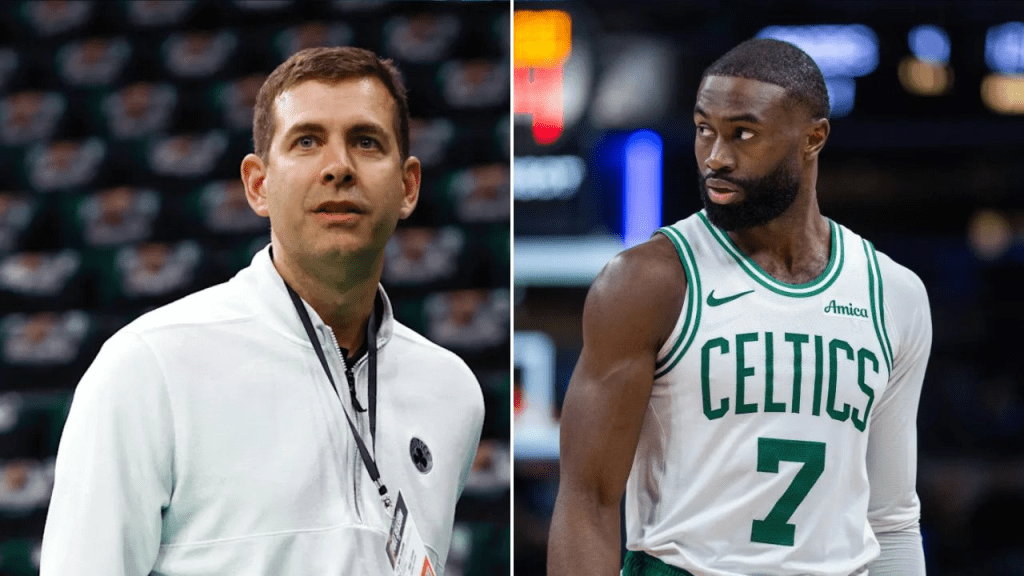
Saying goodbye to a franchise legend is never easy. No matter how many times it happens, watching someone who has been a fixture in your life for as many years as Jaylen Brown has feels like losing a limb. You live long enough and you start to associate them with moments in your own life: where you were when they were drafted, when they made their first All-Star Game, when they stood on top of the heap as world champions, and ultimately when they were traded.

Before the digital age, fans argued about their favorite players in bars and diners, face-to-face. It got heated depending on who you were talking to. With a good friend, you’d laugh, throw in an insult about their team or favorite player—or at them personally—once you felt you’d exhausted all your knowledge.

In an era where we’re all phone-addicted psychos logging every single thought into a public database, these arguments have become far more hostile. Anytime, anywhere, we’re willing to stop what we’re doing to respond to some smarmy Twitter account trotting out opinions and stats meant to convince us that a player we’ve watched since our teenage years is more a detriment to the team than an asset.

The two stats that best highlight this discrepancy are on-off rating and real-adjusted plus-minus (RAPM). The simplest way to explain RAPM is that it accounts for the quality of competition and tries to isolate a player’s impact separate from playing alongside a superstar who might be carrying the load.


—  0.0 RAPM indicates a perfectly average replacement-level NBA player.


—  +5.0 means your team scores five more points per 100 possessions than it would with an average player in that role.


— Conversely, a -3.0 means your team’s scoring margin drops by three points per 100 possessions when you’re on the floor.

Of course, no statistic is ironclad. But RAPM speaks loudest when explaining why Jaylen had surprisingly little trade value and why Brad Stevens chose to bite the bullet. Despite a career season in which he nearly made First Team All-NBA (damn you, Adam Silver and your arbitrary rules), finished sixth in MVP voting, and led a Jayson Tatum-less Celtics team to 56 wins, Brown graded poorly in both metrics. His -1.6 RAPM and staggering -8.7 net on-off rating raised plenty of eyebrows. Other players who have graded poorly in RAPM help illustrate the archetype the metric favors: DeMar DeRozan, Carmelo Anthony, Bradley Beal. Superb scorers and isolation kings, but ball-stoppers on offense and defensive sieves. To win in RAPM, players generally need to limit turnovers, lower their usage rate, and reduce the volume of their shot attempts—things Jaylen has never excelled at with enough consistency.

This isn’t the first time the idea has circulated that the Celtics are better without Jaylen. Since Stevens took control of the front office in the summer of 2021, he has shown a consistent ability to surround his star players with depth to cushion any individual setbacks. The system installed by coach Joe Mazzulla turned the Celtics into a regular-season wins machine. Brown’s negative impact rarely showed up until the playoffs, and by then the team was drowning in so many other questions that the argument faded into the background.
The recent playoff exit cannot be blamed solely on Jaylen, just as the 2023 loss to Miami couldn’t be laid entirely at Marcus Smart’s feet. In both cases, Stevens decided those players had to go.

Stevens’ new approach has been dubbed “spreadsheet maxing” by Celtics fans on Twitter—the next iteration of advanced metrics waging war on the eye test. The reason Jaylen was moved so swiftly, while Derrick White (who also carries a large salary and his own flaws) was kept, is that despite White’s poor shooting last season, he posted an elite +4.2 RAPM and a staggering +9.9 on-off net rating. While Jaylen’s defense is good, it isn’t as multi-faceted as White’s. White can protect the rim at an elite level for a guard (98 blocks last season) while also averaging 1.14 steals per game. In metrics like BBall Index’s LEBRON framework, he ranked as the third-best defensive guard in the NBA.

Remember Paul George? Playoff P. Pandemic P. Playoff Piss. The guy you spent the last decade mocking. Even he graded out better than Brown last season. George posted an elite +3.2 RAPM (42nd in the NBA) and a +4.9 on-off rating with the 76ers. RAPM punishes turnover-prone players who demand the ball and struggle as primary creators. George presents no such issues. He functioned as a secondary playmaker, averaging just 1.73 turnovers per game compared to Brown’s 3.65. Much of Jaylen’s elevated turnover total last season stemmed from Tatum missing all but 16 games, but even in years when the Jays played together, Brown’s playoff turnovers routinely sat slightly above three per game (2018, 2019, 2022, 2023, 2025, and 2026).

Stevens is betting heavily that George’s superior ball navigation, team communication, and screen navigation will translate better in Boston. I don’t believe Stevens secretly covets George long-term. He is often injured, well past his prime, and his contract has routinely ranked among the worst in the league the past couple of years. Instead, I think Stevens made the best of a dire situation that risked becoming deeply dysfunctional. Jaylen had three years left on his current contract and was eligible for a two-year extension worth up to $142 million in September.

Jaylen Brown’s remaining contract:

2026-27: $57,736,350

2027-28: $61,672,814

2028-29: $65,609,27

Paul George’s remaining contract:

2026-27: $54,126,380

2027-28 (player option I’d bet my life he picks up): $56,586,670

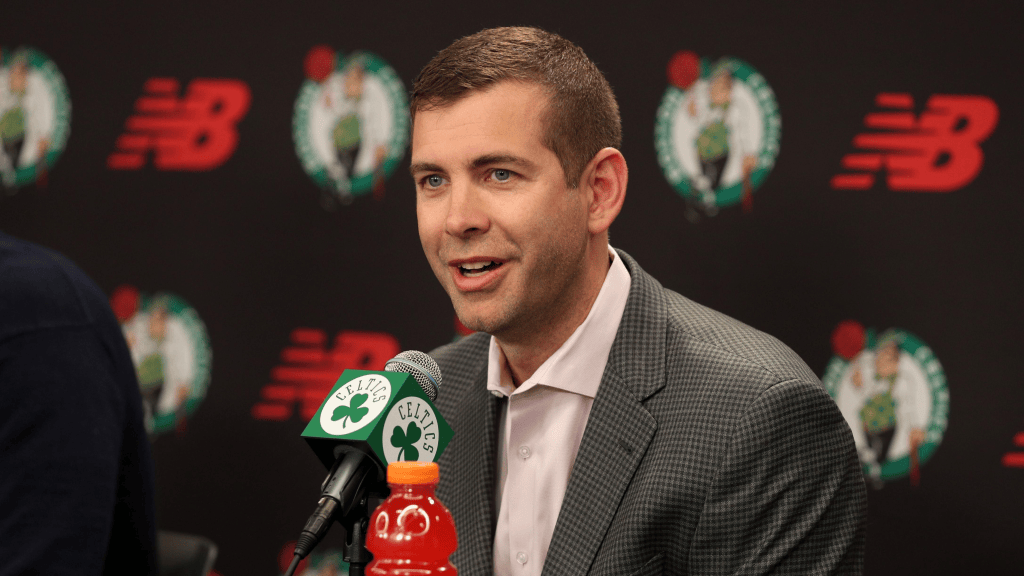
Notice there’s no pressure to extend George. He’s a mercenary entering a situation with relatively low fanfare and expectations. Stevens stressed the importance of George playing a complementary role in his press conference earlier this week.


In the context of last season in Philadelphia, George performed admirably. While Tyrese Maxey and VJ Edgecombe are excellent young guards the 76ers should build around, they were caught between eras because Embiid and George consumed such a large portion of the cap while missing significant time. When George did play, he navigated a clogged offense and volatile roster extremely well. Lacking five-out personnel and consistent double-team gravity from Embiid, George had to create many of his 39% threes on highly contested, difficult looks.

Once you dry your eyes and step back, you can see what Stevens is aiming for. He viewed Jaylen as a luxury product who looked spectacular because Boston’s offense ran flawlessly around him, masking high turnovers and modest playmaking. George, by contrast, was a structural load-bearer—he stepped into a messy, broken ecosystem in Philadelphia and still elevated the team’s floor through shooting gravity and defensive disruption.

The dice are in Stevens’ hands. To win, he needs a healthy George campaign in which the veteran doesn’t miss large chunks of time or disappear when needed most. They don’t need him to be the second- or even third-best player. If Payton Pritchard takes another leap and Derrick White continues his elite production while rediscovering his jump shot, the Celtics will still be very good.

Vinny Jace is a special contributor to The15net.com. 
TO’s & Threes – Celtics Column 07/02/26 – Part Two

By Vinny Jace, Special to the15net dot com:

Welp. This isn’t the first time I’ve eaten crow. Turns out Brad Stevens didn’t think as highly of Jaylen Brown as I do. Nor did Stevens seem to even want him on the team, regardless of the underwhelming potential returns.

I won’t turn on Jaylen now that he’s no longer on my team. I won’t suddenly become an on/off metrics guy when I rarely write about those numbers. It’s not that I don’t believe they’re valid—they are. But in Jaylen’s case, I spent years shrugging them off as they came back increasingly dire. The regular-season wins kept pouring in. They built a team with him as the second-best player that went to the Finals twice and won a title. Sure, JB put us in some bad situations in the past, but he also got us out of them.

The night he was drafted to a chorus of boos, Brown said in his first interview as a Celtic that he’d go to war for this city. He did. And he won that war.

In the end, Brown still wished to return to the Celtics and was traded anyway. I’m sure Stevens loves Jaylen on a personal level. But professionally? I bet he fucking hated him. The reasons were probably his late-game decision-making, dribbling when pressured, and of course the aforementioned on/off numbers that found him repulsive despite a career year.

Brown’s fate was sealed the moment he inked that $285 million contract in the summer of 2023, making him the richest player in NBA history at the time. From that point on, he became a negative asset. It didn’t matter what he did—and he did a lot in the ensuing three seasons—the money was simply too much. 

The Celtics saw no path to contention if their top two players were making over $50 million a year. There was even a chance to snag Giannis. If Brown had the value I’ve been saying he did, the Bucks wouldn’t have taken Tyler Herro over him. There are plenty of other reasons that trade didn’t happen, but this is where we are now. The 2024 Finals MVP was moved to Philadelphia for Paul George, two first-round picks, and two second-round picks.

Obviously, I don’t know what Stevens was actually thinking. But that doesn’t mean I can’t pretend to!

My gut reaction is that Stevens thought George > Jaylen. Even though Jaylen was the younger, healthier, and more proven player, that doesn’t change the fact that the 36-year-old George sent the MVP candidate home in this past playoff series.

Brown is the superior wing in basic counting stats. But George’s on/off numbers destroy Brown’s (negative 4.4 for Brown vs. George’s positive 4.9). Perhaps the idea of getting George into the same system that may have propped up Jaylen—combined with George being a better defender, a smoother offensive fit, and the added draft capital—really enticed Stevens.

I honestly thought that when this moment arrived, I’d be able to write more. But the anticipation proved more impactful than the conclusion. Boston is betting that their depth and star power can improve with George in uniform. They’re also betting on the Los Angeles Clippers being bad in 2028 and the 76ers in 2031—or that those picks become valuable assets they can flip for a star in the near future.

Ultimately, their cap situation remains largely unchanged. What Boston gains is flexibility: eight first-round picks and seven second-rounders. Is this the final roster? We’ll see.

The Jays era is over. What a glorious era it was. They brought Banner 18 home. Now it’s up to Stevens to equip the remaining Jay with the help needed to chase number 19.

There’s a lot of work to be done. I won’t get your hopes up. But I also won’t tell you to despair.

Vinny Jace is a special contributor to The15net.com. He does not live in a baby New York.
TO’s & Threes – Celtics Column 07/02/26 – Part One

By Vinny Jace, Special to the15net dot com:

Jaylen Brown was traded.

Oh, and Mitchell Robinson and Mike Conley are here too. Credit to the Celtics front office for not letting the internet distract them and for remembering there were legitimate holes on the roster that needed addressing. Let’s start with the less heralded signings. I prefer to get the least important information out of the way first.

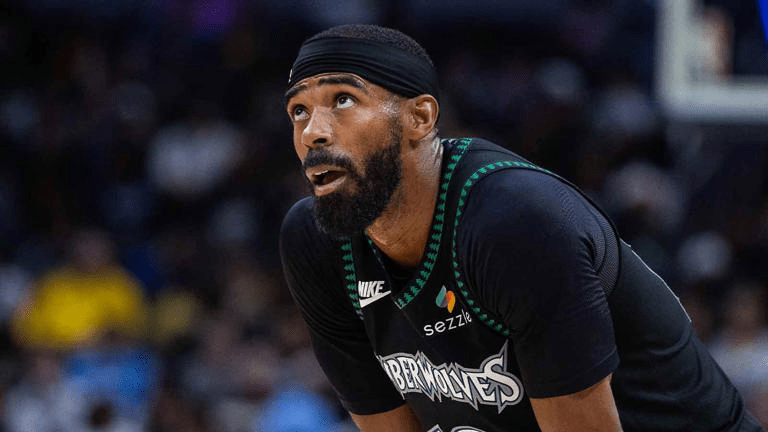
Mike Conley, age 38 and entering his 20th season, recently signed a one-year veteran minimum deal worth $3.8 million. His career is basically Al Horford if he were a point guard: a player who has bounced around the league, appeared on a few deep playoff teams, and is largely respected as a veteran who can steady the ship on off nights. Of course, this is not the Mike Conley of the Grit and Grind Grizzlies. His minutes per game have dropped drastically due to age and injuries. His defense is not what it once was. One does worry that Conley, at this stage, could become a crutch for Joe Mazzulla to turn to when higher-upside, younger options are on the bench—namely Hugo Gonzalez and Baylor Scheierman. The rationale for why that might not happen is that those two are more shooting guards than true point guards. Beyond Derrick White and Payton Pritchard, there wasn’t a viable option to eat up minutes at the position.

The basic stats from his last season in Minnesota don’t look pretty. Playing 18 minutes a night, Conley averaged 4 points and 2 assists while shooting 33% from both the field and three-point line. His box-score plus-minus was -1.3. Conley is the type of player you sign when you need a veteran but can’t afford a superior option. My preferred role for him on this team is to eat up meaningful minutes so the stars don’t have to play as much and to serve as an on-court assistant coach. Now on to the free-agent big man the Celtics recently signed using the full mid-level exception.

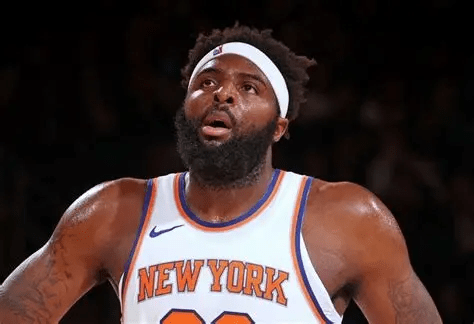
Robinson, age 28 and fresh off a title with New York, is now a member of the Celtics on a three-year, $43.7 million deal. Prior to this signing, the Celtics’ big-man rotation was the team’s weakest position. Beyond Neemias Queta, they lacked rim protection and defense. Armed with the full MLE, Brad Stevens was able to sign Robinson away from the New York Knicks after owner James Dolan made it publicly known he did not want to enter the second apron to retain his backup center. Robinson was the lone homegrown success story for the Knicks this past season. Drafted in the second round in 2019, he battled injuries before emerging as a Sixth Man of the Year candidate and a key contributor who helped New York to their most successful run in a quarter-century.

Robinson ranks in the 99th percentile as a roll man in pick-and-roll actions, averaging 1.70 points per possession with an 86% scoring frequency. That’s very good. Queta is a fantastic roll man in his own right, and now Boston has another big who can do the same thing. The main concern with Robinson is his health—he has missed 138 games over the past three years. The Knicks took excellent care of him and got lucky to have him fully healthy and available for the playoffs the last two years, where he protected the rim at an elite level. He gave the Celtics fits in 2025 and guarded Victor Wembanyama better than most. Potentially, he is the ace the Celtics needed. He was the ace for the Knicks. It’s all about how his body holds up. There was bigger news today… we’ll talk about that later.

Vinny Jace is a special contributor to The15net.com. 
TO’s & Threes – Celtics Column 06/26/26

Is the Celtics glass half-empty, or half-full?

By Vinny Jace, Special to the15net dot com:

It’s been a rough few months for the Celtics, to say the least. It’s not often that people look at a roster featuring a four-time All-NBA First Team superstar, a Finals MVP, a reigning Coach of the Year, and a two-time Executive of the Year — and still feel the team has hit a wall. In some ways, the Celtics have. If there is a fault in Joe Mazzulla’s philosophy, it isn’t shooting too many threes. It’s the lack of an off-switch from their frantic style in the playoffs, when defenses can game-plan around Boston’s desire to win the numbers battle. It’s hard to make your threes when you can’t attack the basket against drop coverage. The Celtics have failed to generate good looks in the clutch during the playoffs in two straight years, and it has resulted in early exits that have dramatically shaken the confidence this group built from their title run.

Getting Giannis was supposed to fix that. But for whatever reason, the pursuit fell through. We can blame Brad Stevens for not going all-in, refusing to include Hugo Gonzalez, Baylor Scheierman, and more picks on top of the two first-rounders the Celtics are confirmed to have offered. Or we can believe the rumor that Bucks owner Jimmy Haslam nudged GM Jon Horst toward accepting Miami’s offer out of fear that Jaylen Brown would demand a trade. (Author’s Note: My source is Kevin O’Connor’s tweet: Kevin OConnor (@KevinOConnor) on X)


No matter who we blame, the Miami Heat now have Giannis Antetokounmpo, and the Celtics do not. Their problems remain the same as before, and the clearest avenue to address them is closed. It’s easy to fall into despair and remember the later days of the Big Three era, when it felt like Danny Ainge couldn’t make the necessary moves to prop up an aging core while rivals got younger, faster, and better.

The silver lining is that Stevens isn’t wrong, in a vacuum, to walk away if he believed the price was too high. We’ll see how Miami builds around Bam Adebayo and Giannis. They are undeniably thin in an era where the last three NBA champions have been incredibly deep. They do still hold their 2028 and 2029 first-round picks, and we’re about to find out how valuable those picks are now that Miami won’t be lingering in the play-in. If the Heat can navigate these limitations and win a title or two, Stevens getting cold feet will look worse. If they fail, the bill will come due, the Heat will be in hell, and the Celtics will still have options.

The three most gnawing words fans hate to hear: wait and see.

The advice I’ll give Celtics fans is this: stay off Twitter. Stay off Reddit. If news breaks, you’ll find out the way your fathers and grandfathers did — a friend will tell you. If it’s any consolation, Jaylen appears ready to let bygones be bygones. Unless Stevens pokes the bear and tries to trade the two-time All-NBAer a second time in one summer and that deal also falls through, it’s safe to assume Brown will remain a Celtic for the foreseeable future. The front office will pivot to addressing their pitiful situation at center and may look into trading Derrick White.

For all the faults I’ve previously laid out about “Mazzulla-Ball,” it is uniquely suited to churning out 50-win seasons and making us forget the various weaknesses this team possesses. After all, we entered the past playoffs thinking we were a Finals team with Neemias Queta, Luka Garza, and Nikola Vučević as our centers. We’ll see if White can rediscover his jump shot. If a fully healthy Jayson Tatum will fix Boston’s problem of going 3-11 against the NBA’s best teams last season. If another year of Jordan Walsh as a lockdown bench defender — along with Hugo and Baylor as reserve spark plugs — can move the needle.

Can they beat New York, Miami, Detroit, or Philadelphia as currently constructed? Probably not. And that feeling truly sucks. But there’s no use dwelling on it now. Situations change. Things can shift in a month or two. Even if everything remains the same and the Celtics fail at every plan to improve this offseason, they’ll have plenty of flexibility next summer — perhaps making it easier to trade Brown and/or White under new circumstances.

We. Will. See.

Vinny Jace is a special contributor to The15net.com. He does not live at Boston Stadium.

TO’s & Threes – Celtics Column 05/22/26

Science!

By Vinny Jace, Special to the15net dot com:

Last summer, the Celtics were in a dire cap situation, paying over $500 million for a roster without its fulcrum. Brad Stevens spent that offseason offloading Jrue Holiday and Kristaps Porzingis for meager returns. The point wasn’t to receive meaningful player compensation, but salary relief. The Celtics couldn’t even retain Luke Kornet—a player Stevens had called a top priority—despite holding his Bird Rights. The 2025-26 Celtics were in no position to improve and had to rely on in-house talent and bargain-bin additions.

Nearly a year later, the Celtics have significant breathing room between themselves and the first and second aprons. They are below the luxury tax and now possess tools unavailable last offseason: the full mid-level exception, the ability to aggregate salaries to match larger incoming contracts, unfrozen picks they can trade, and a reset repeater tax clock.

This summer, Boston stands at a crossroads: try once more to build around the current core or reshuffle the deck. The argument for minimal changes is that the team already has solid bench depth. They can chalk up their first-round exit to bad luck, hope Jayson Tatum returns stronger in 2026-27 and pray he doesn’t miss another Game 7.
But the reason Tatum missed that game was calf tightness caused by the heavy minutes he was forced to play. The Celtics had to rely on him as their do-it-all forward because players on the roster simply couldn’t replicate what he does. In the past, the Celtics could count on Tatum as an ironman capable of shouldering that burden nightly.

Post-Achilles tear, however, he is more vulnerable. Tatum has achieved a miracle by returning from such a devastating injury so quickly and looking every bit the franchise player. Yet the circumstances around how much the team can put on his plate have changed.
Watching games from the 2024 season, what strikes me most is how diverse the Celtics’ offense was in the playoffs. Opponents could not simply drop in coverage to stifle Boston’s athletic wings, who prefer to score near the rim, because of the game-breaking presence of Al Horford and, for a brief period, Kristaps Porzingis.

The Celtics won’t win another title until they find a big man who can once again make it easier for them to attack close to the basket. Joe Mazzulla has mastered using shooting variance to turn the Celtics into a regular-season machine, but the past two playoffs have shown—in a smaller sample size—that this approach can backfire horribly without offensive diversity.

Even with the available tools, the Celtics face limited high-impact options unless they shop one of Jaylen Brown or Derrick White. Brown is eligible for a two-year extension this October that would likely keep him in Boston for the rest of his prime and make him a Celtic for life if he signs. Brown has been an outstanding player and person for both the team and the Boston community. But this is a cold business. There is a real argument that the Celtics’ downward trend can only be properly addressed if the Jays era ends with his departure—either for a disgruntled superstar (if possible) or a collection of players who better fill out various roster needs.
The best realistic option at center may be bringing back Nikola Vučević, provided the price is right.


His minutes often looked awkward last season; he frequently appeared unsure what to do with his hands, likely due to the finger injury he suffered in March. Still, he serves a purpose, and Mazzulla has managed him effectively by neutralizing his weaknesses and leveraging his strengths. Re-signing Vooch as a backup veteran big on a modest salary would be a quiet win regardless of Boston’s bigger moves. Other options include using the $15 million mid-level exception on Mitchell Robinson to potentially screw over the Knicks. The catch is that this would hard-cap Boston at the first apron, and Robinson has a significant injury history. Boston could end up doing the Knicks a favor.

An uninspiring pool

The free-agent pool for centers is otherwise uninspiring. Upgrading from Luka Garza by chasing Nick Richards is one modest possibility, but that’s about it. Jusuf Nurkić is unlikely to leave Utah, and Robert Williams III will probably command a larger salary than Stevens wants to pay an oft-injured big.
This all circles back to the broader question of whether it’s time to lay the Jays era to rest. Whether targeting Giannis Antetokounmpo or someone like Domantas Sabonis, the changes this team needs cannot happen without moving one of the three highest-paid players while they are still at peak value. The overarching factor is that the Celtics cannot win another title without a big man who can do what Horford once did.
This league has always been dominated to some degree by centers. The Thunder, Spurs, and Knicks all feature game-breaking bigs who can create for themselves and protect the rim. Even a solid, all-around player like Sabonis would feel like a godsend in Boston because the team hasn’t had a big who could meaningfully expand its offensive repertoire in years.

Teams in Boston’s position often double down on the past and pay the price, or they sever ties and risk digging the hole deeper. Denver remains tied to Nikola Jokić and Jamal Murray and hasn’t returned to the Finals since 2023. Milwaukee misidentified its problems by swapping Jrue Holiday for Damian Lillard and now faces the possible end of the Giannis era. Boston cannot afford to be stagnant or foolish. Brown has not minced words: he wants to remain a Celtic and retire here. Boston is his home. But can management realistically believe they will recapture glory by recommitting to this core when the roster has so many other pressing needs?

Vinny Jace is a special contributor to The15net.com. He does not live at the Museum of Science.

TO’s & Threes – Celtics Column 05/11/26

See you in the fall, old friend.

By Vinny Jace, Special to the15net dot com:

In one word, the 2025-26 Boston Celtics can be described as “confusing.” Heading into the season, the team was top-heavy, with its best player in rehab and its big-man rotation hopelessly thin. On top of that, they asked too much of their top three scorers. From Game 1 of the regular season until the fourth quarter of Game 5 in the first round of the playoffs, we collectively forgot those concerns thanks to players performing above their pay grade, excellent coaching, and championship DNA. From the first man to the last, Joe Mazzulla kept his roster ready. As players saw their roles extended, restricted, and extended again, they remained vigilant and contributed all the same. Prior to the season, the Celtics lost four critical pieces from their championship roster—including three big men and an all-around point guard—and replaced them with bargain-basement finds.

The reason the Celtics are now watching the playoffs instead of participating is that, 12 months ago, Jayson Tatum tore his Achilles tendon. The team viewed the astronomical luxury-tax bill as malpractice if left unaddressed. It was a rare moment of responsibility: essentially burning a year of contention to prepare for Tatum’s return.
Nobody—and I mean nobody—thought in the summer that Tatum would be back by March. To assume anything other than a full-season absence was laughable.

Off the back of a career year from Jaylen Brown, the Celtics exceeded expectations and outperformed their preseason win projection. By the time Tatum returned, they closed the regular season on a strong 13-3 run. Suddenly, the Celtics went from resilient but limited to legitimate title contenders. A rematch with the New York Knicks seemed inevitable.

And then the tides turned. Derrick White couldn’t throw the basketball in the ocean. Mazzulla’s reluctance to bench Sam Hauser for Payton Pritchard led to poor offensive results at the exact moment Philadelphia was discovering rhythm with a returning Joel Embiid. With no sufficient answer for how to defend Embiid, the Celtics got gashed inside and were left at the mercy of their three-point shooting—which often went cold due to a lack of offensive diversity that only became apparent recently.

Game 7’s loss confirmed that this team is in fact going backwards, and the goodwill built from the championship run is on shaky ground. Mazzulla is no longer the epic wunderkind who could turn chicken shit into chicken salad. He’s a flawed architect of a system that relies too heavily on three-point variance and its superstar. Jaylen Brown is no longer the Finals MVP and borderline First Team All-NBA player. He’s now viewed as a braggart who couldn’t cash the checks when it mattered most—never mind that he actually did so before. We have the memory of goldfish.

There are facts that cannot be ignored, even if we wish to downplay the hyperbole. Tatum’s Box Score Plus/Minus this postseason was once again over +8. While fantastic for him individually—especially considering what he went through just months earlier—it highlights a team that lacks answers beyond its star. Fans often share clips of the gravity Tatum commands, with multiple teammates left wide open. The problem over the last two years is that the Celtics have lacked the ability to make defenses pay for that over-help by attacking in the post.

Kristaps Porzingis, in 2024, filled that void even while injured for much of the playoff run. It created avenues for Boston to diversify its offense, allowed Tatum to contribute despite poor shooting, and prevented role players like White from being overtaxed. When Porzingis was sidelined, the Celtics’ offense reverted to “Mazzulla-ball”—a wrinkle that caught opponents off guard because there wasn’t 82 games of film on it. Now it’s a staple, and teams know how to cut off circulation to everyone below the top two.

The discount Boston Celtics are victims of their own success. They got so good they managed to break our hearts in the end. The 76ers are no longer the little brother. After years of stepping on rakes, they are the ones celebrating at our expense. We can console ourselves with the fact that Philadelphia’s entire project since 2013 led to this moment—their crowning achievement. Sam Hinkie tweeting a clapping GIF not because his golden goose won a championship, but because they beat a transitional Celtics team in seven games—where Boston’s best player missed the decisive contest—and they almost blew it anyway.

None of that matters now. The 76ers have the edge. The next time they come to Boston, they’ll bring an undeniable, unbearable swagger that the Celtics must destroy. Reasserting dominance after losing ground is never easy.

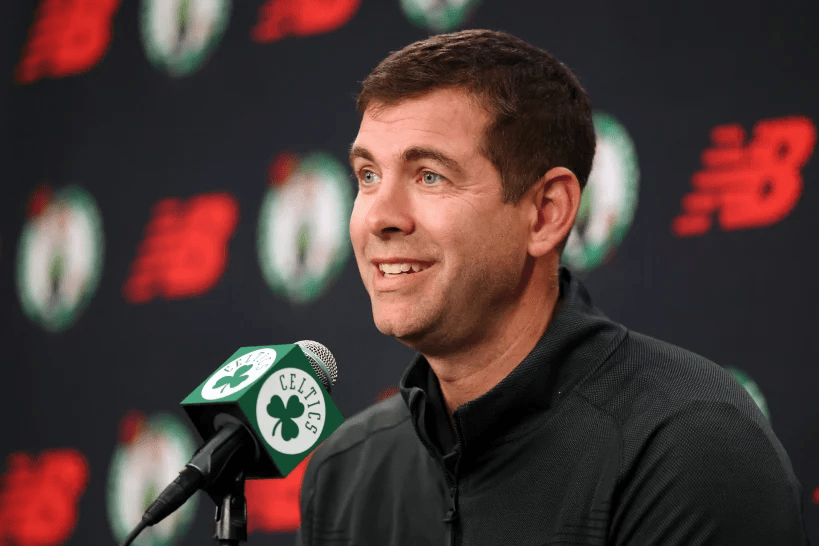
Brad will know what to do.


The core of Tatum, Brown, and White is locked in and going nowhere. The Celtics won’t do what Milwaukee did and jettison a core piece for a big name—they aren’t that desperate yet. Mazzulla is on trial with the fans, but Brad Stevens remains committed to his coach. Their cap situation remains complex, with some breathing room but not enough for radical shifts. If they nibble around the margins, stay below the luxury-tax line, and reset the repeater tax clock, they’ll be able to spend back up to the aprons in 2027 without the massive compounding penalties from 2024 and 2025.
We all hate to hear it, but 2026-27 will likely be another gap year. They may use the $27.7 million trade exception from the Anfernee Simons deal to acquire a high-level starter, along with their $15.1 million mid-level exception.

Free-agent bigs that come to mind:

•  Jusuf Nurkić

•  Sandro Mamukelashvili

•  Robert Williams

•  Nick Richards

All situational backup bigs who can do what Garza did—only better.
Trade candidates:

•  Daniel Gafford

•  Onyeka Okongwu

Also situational bigs who would likely cost draft capital and/or a player.

The free-agent pool at guard is barren, with Jevon Carter the only realistic name the Celtics might pursue.

It’s going to be a long, boring summer. Today belongs to the 76ers and their second-round opponents in New York. Hopefully, by the summer of 2027, that will have all changed.

Vinny Jace is a special contributor to The15net.com. He does not live in the past.
TO’s & Threes – Celtics Column 04/20/26

By Vinny Jace, Special to the15net dot com:

Heading into the playoffs, the Celtics’ remaining questions center on whether they can beat the team best suited to face them. The New York Knicks have won seven of their previous ten matchups against Boston since the 2025 playoffs. Their wing depth—consisting of Mikal Bridges, O.G. Anunoby, and Josh Hart—presents unique challenges for the Celtics’ wings. The trio finds ways to shrink the floor, stifle Boston’s ball movement, and convert those disruptions into points on their end of the floor with clockwork efficiency.

Knickerbockers


On top of that, dynamic guard Jalen Brunson has made mincemeat of All-Defender Derrick White. In their previous two outings, Brunson has been electric: he scored 31 points in the Knicks’ February 8th drubbing of Boston, followed by a 25-point, 10-assist performance earlier this week. The Celtics have tried adding a wrinkle to their coverage by throwing bigger bodies like Jordan Walsh on him. It worked in their December 2nd matchup, which was Brunson’s worst outing against Boston this year—he was limited to just 15 points.

The caveat to all these losses is that Boston has never faced New York with both Jays available. Typically, the Celtics prefer to sag off New York’s “non-shooters” such as Hart, but that approach is now complicated because Hart is no longer a liability. His three-point percentage this season sits at a healthy 41%. Against Boston in this previous contest, it soars to 71%.

Several Knicks attended Villanova University, in Pensylvania.


The unique issue the Knicks present is that they are no longer as reliant on Brunson as they were in the past.

Mazzulla doesn’t appear to regret his strategy of sagging off Hart. If a scheme alteration isn’t in the cards, perhaps he is betting that a healthy Tatum paired with Brown will overwhelm and exhaust Hart, leading to a less reliable jump shot. New York’s use of Hart against Boston has been crucial to their success. The Knicks also find ways to neutralize Neemias Queta by switching him onto smaller, quicker players and dragging him away from his preferred station near the basket. Queta’s matchups against New York haven’t been encouraging, he’s often been bested by Karl-Anthony Towns and outmuscled by the athletic Mitchell Robinson.

Him?


The February acquisition of Nikola Vučević leads me to believe the plan isn’t to win the battle on the boards, but to make the most of their first chances. Vučević subtly got into a groove in the second half against New York, and it opened the paint up for cutting action.

The Celtics will likely rely on Vučević more than Luka Garza in a hypothetical matchup against the Knicks. Despite Vučević’s defensive shortcomings, his veteran savvy and ability to space the floor make him the better option. While Vučević remains inconsistent, he poses at least a semblance of an outside threat that forces the Knicks to pay attention to him. Garza’s slower feet, lack of athleticism, and rim-centered game make him far less of a threat. Though Garza has shown flashes of brilliance, they’ve mostly come against teams without notable pedigree and in relatively low-stakes contests.

Or him?


The adjustments I can see Mazzulla making the next time these teams meet include placing White on Hart, assigning Brown, Tatum, or Walsh to Brunson, and using Vučević to drag Robinson away from the rim. A potential rematch series will be won in the trenches—in the pillboxes and scrums—and it won’t look pretty. Either the Knicks will rip the Celtics’ heart out, or vice versa. The only thing I’m certain of is that neither team will go down easy.

Vinny Jace is a special contributor to The15net.com. He does not live in any of the five boroughs of New York.
TO’s & Threes – Celtics Column 03/27/26

You know who didn’t come back from an Achilles injury? Achilles.

By Vinny Jace, Special to the15net dot com:

It is almost impossible to appreciate anything in our modern, instant gratification world nowadays. It is not enough for a top 5 superstar to return from a devastating injury in less than a year after surgery; if he is not immediately his old self after two weeks, then he’s a bum. Must be comfortable writing 240-character eulogies from the comfort of your couch while wondering what toppings you’ll order for your next pizza pie.

The concerns for Jayson Tatum are real, and they are also expected. If by some miracle he was his MVP-caliber self at this point, I’d consider it a glitch in the matrix. You can compare him to Kevin Durant, but the difference is Durant took 18 months to recover. The argument against Tatum is that he is not the otherworldly shot-maker Durant is. He plays more like a mini-Giannis, utilizing bully-ball to a maximalist extent. Two different players—all they shared was having the same injury at one point during their primes.

But it’s not like Durant is the same player since his injury. The shot-making is still off the charts, but his passing, playmaking, and athleticism suffered. The contrast between what he is now and what he was in 2014, 2016, 2017, etc., is stark. Even as he’s recovered, he lost something that cannot come back. That’s what makes the Achilles worse than most other injuries.

Does our Hoplite still have his hops? So far. The shooting touch will return, in time.

For Tatum, it’s impossible to see what he’s lost yet. It’s hard to attribute his missed attempts to the injury or just growing pains reintegrating into the offense. We probably don’t want to admit it, but the Celtics established a cohesive hierarchy in Tatum’s absence and reinvented themselves from a high-volume three-point team living and dying on variance to a multi-faceted system that incorporates cutting, the post, and near-the-basket action. Essentially, they are a superior version of the 2024 team in terms of the ways they can score. Whether Tatum can find his footing on a team that isn’t as reliant on him is another topic for discussion.

Prior to his return, Tatum said he was not coming back to be a role player. I don’t know why the term “role player” is treated like a slur in NBA circles. Role players are important. They play, well, a crucial role. Role players are the glue that holds your star players together and elevates the rest of the roster. If we look at the Los Angeles Lakers and the little renaissance they’re experiencing, it can be attributed to LeBron James’ usage going down dramatically and clearing the way for Luka Doncic and Austin Reaves to be their No. 1 and No. 2 best players. It’s something Tatum should be open to so Jaylen Brown and Derrick White can continue leading the show. If Tatum was slotted into a role similar to Baylor Scheierman for the rest of the year, I struggle to see the indignity beyond fat losers online having a laugh.

 (Photo by Brian Fluharty/Getty Images) 

It is undersold how difficult it is for Tatum to rediscover his groove in the late parts of the regular season, in the midst of a tight race for the second seed. Tatum is not in basketball-playing shape, and we can’t fault him for that. He’s huffing and puffing, playing nearly thirty minutes a night when less than a month ago he just started playing competitive five-on-five.

The pluses Tatum brings on the floor are his defense and passing. The Celtics’ turnovers are cut down when he’s on-ball, facilitating and moonlighting as the point guard. He’s their best dribbler and passer by far. But what the Celtics aren’t better at when Tatum is on the floor is shooting the basketball. Sam Hauser is critical to their outside game. A development this season has been Brown’s decision-making and ability to not settle for jump shots, whereas in the past he would. He’s a constant attacker who’ll create for himself even while guarded tightly, and can kick out to an open Hauser in the corner after commanding lethal amounts of gravity.


Tatum on the floor in his current state messes with that nucleus. That’s not to say he’s a hindrance. The Celtics sport a +14.1 net rating when he’s playing. And we shouldn’t ignore the fact that Tatum has altered his play style to better complement those around him. He is being more selective in his shot attempts, emphasizing his other skills that don’t involve just scoring. But there are some tweaks needed to make the offense flow smoother.

If Joe Mazzulla can figure out a way to lower Tatum’s minutes, reduce his role into a perimeter shooter, versatile defender who can guard multiple positions and crash the boards—sort of like a high-energy bench player who starts—you’ll basically have a taller version of Derrick White.

In 2026-27, the expectations for Tatum will be that he returns to his All-NBA form. Until then, a role player is what should be expected from him, and he deserves a certain amount of grace for what he’s battled against and what he’s willingly sacrificed for the betterment of the team.

Tatum is not sulking in his tent.

Vinny Jace is a special contributor to The15net.com. He does not live on the coast of the wine-dark Aegean Sea.
TO’s & Threes – Celtics Column 02/09/26

By Vinny Jace, Special to the15net dot com:

Heading into the trade deadline, the Celtics rode the high of an unexpected 34-18 record that currently has them sitting as the No. 2 seed in the East, a half-game ahead of the favorites to come out of the conference, the New York Knicks. What was anticipated to be a lean season, heavily reliant on established stars, turned into an egalitarian effort where perennial no-names became big contributors. Neemias Queta evolved from fourth-string center to starter-level rim protector, while young players like Hugo Gonzalez and Baylor Scheierman turned in elite individual net ratings—Gonzalez at +17.7 and Scheierman at +10.7. The Celtics enjoy a luxury few expected them to have.

Had the Celtics not modestly hit on their late-round draft picks, perhaps they don’t trade Anfernee Simons for Nikola Vučević. Simons played a position of no real need; in fact, it could be argued he was redundant even if his impact was positive. Vučević filled a void, as Boston was thin at the big positions beyond Queta. Luka Garza is slow and can’t really defend. Chris Boucher never earned consistent time on the floor. Xavier Tillman never recovered physically from his injury.

Do not be frightened because it looks like Cam Newton typed his last name.

Vučević is not a flawless player and is quite frankly divisive. He’s never played for a team with real expectations or any semblance of a winning culture. He meandered through the post-Dwight Howard Orlando Magic era for most of his career, then became part of one of the worst trades of this decade when he was shipped to the perennial play-in franchise, the Chicago Bulls.

Like Simons, Vučević’s reputation is that his offensive numbers are empty calories—a product of bad systems—and that he’s a defensive black hole. For what it’s worth, the Celtics have managed to cobble together a top-10 defense this year despite playing players we’d define as bad defenders, and Vučević doesn’t appear any worse than those already incorporated into the rotation. Joe Mazzulla has shown an adeptness at hiding players’ issues and not over-relying on them when he doesn’t have to.

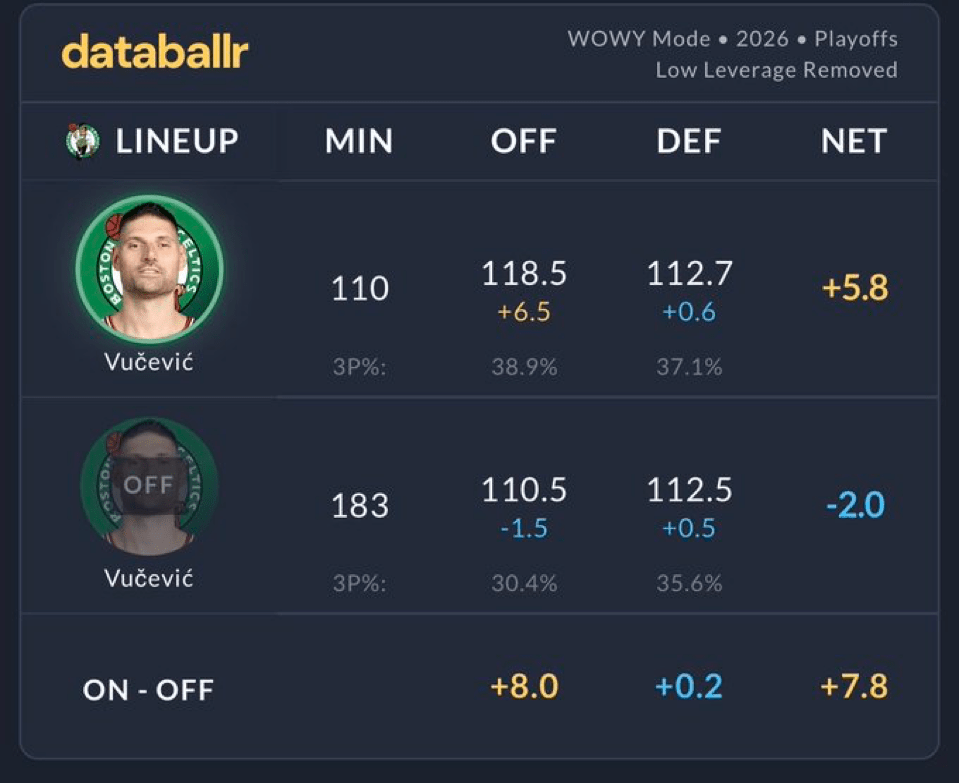
Vučević’s debut against Miami saw him matched up against elite defensive big Bam Adebayo. It was clear early on that he had his hands full as the Celtics fell into a 22-point hole before mounting a 98-96 comeback victory. Part of that surge came from Vučević dragging Adebayo out of the paint, hitting cutters to the basket, contesting rebounds, and converting on second-chance points. It’s not an elixir that renders bigs like Adebayo non-issues, but it gives Boston a fighting chance when Queta is on the bench.

Vučević notched a double-double in his Celtics debut: 11 points (4-8 FG), 12 rebounds (6 offensive), and 4 assists in 28 minutes off the bench. Prior to the game, he expressed a willingness to convert his role from starter to bench player to accommodate the team:


Even if Vučević doesn’t have the ideal traits for a big man on a championship contender, his attitude fits the mold perfectly—and that in itself is a huge win.

This trade is low-risk, high-reward for Boston. Simons was nice but wasn’t a long-term option and was likely to command a salary too rich for Boston’s blood. Vučević, if things go smoothly, could remain in Boston at a modest price and serve as a reliable backup big when Tatum returns to full strength next season. The trade also contributed to lessening Boston’s tax bill. Currently, they reside in the repeater tax, but by avoiding the luxury tax this season and next, they’ll become standard taxpayers. This opens a runway from 2027-28 to 2029-30 to spend more liberally.

Back in June, the Celtics’ projected salary and luxury tax bill was $540 million. Today it’s at $186.5 million, and they are only two games worse than they were last year. The Celtics cut costs when they had no choice given the unique situation they found themselves in, and they remain contenders to come out of the conference. And now they have added a big man who can potentially help them do that.

Vinny Jace appears on the Beyond Entitled podcastHe does not live in the Balkans.

« Older Entries